
Summary:
Google Marketing Live 2026 made one thing very clear: Google Ads is no longer just evolving, it’s being rebuilt around AI. From conversational search ads and AI-generated creative to smarter bidding, lead qualification, predictive measurement, and AI-powered shopping experiences, Google is shifting the entire advertising ecosystem toward automation driven by business data and user intent. The focus is no longer just on keywords and manual optimization. It’s now about first-party data, creative strategy, conversion quality, customer journeys, and teaching AI how your business works. For marketers, agencies, and business owners, this isn’t a small platform update, it’s the beginning of a completely new era in digital advertising.
Before I share the complete overview, if you need help with google ads, Hire Me here imrannadir.com
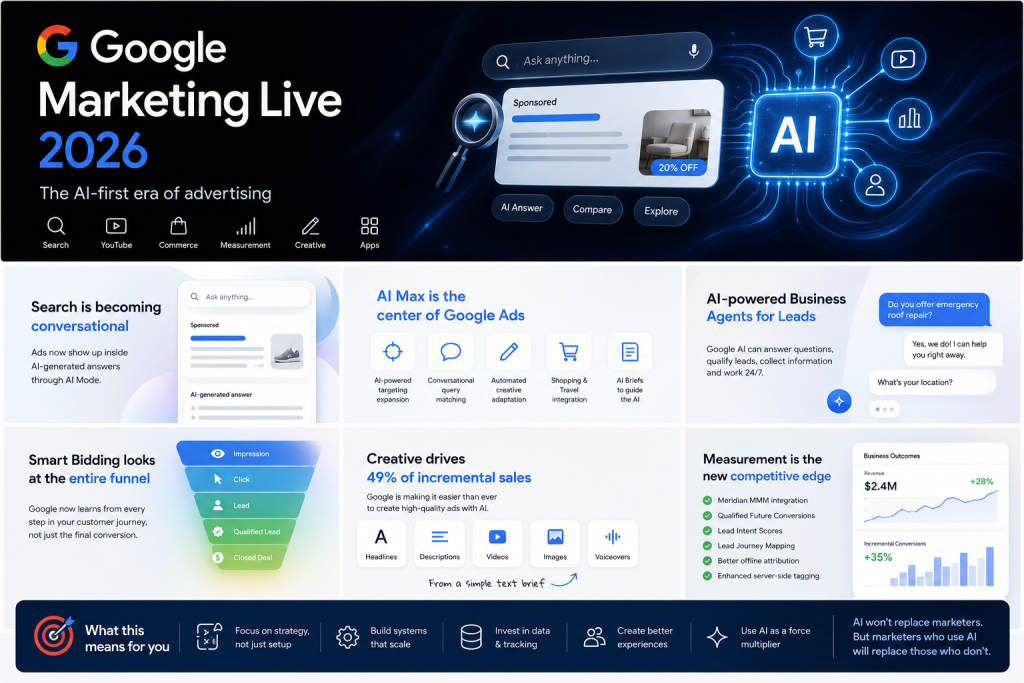
Most people think Google Marketing Live is just another event with “AI updates.”
It’s not.
This year made one thing very clear:
Google is rebuilding the entire advertising ecosystem around AI-first user behavior.
Not just campaigns.
Not just targeting.
Everything.
Search behavior.
Shopping.
Lead generation.
Measurement.
Creative.
Attribution.
Even checkout.
If you run Google Ads, own an agency, manage eCommerce, or generate leads online, this isn’t optional information anymore.
This is the direction the platform is moving in.
AI Is No Longer a Feature Inside Google Ads
It is Google Ads now.
That’s the real headline from Google Marketing Live 2026.
The old way of running campaigns manually:
- building tight keyword groups
- controlling every search term
- writing every ad variation manually
- managing audiences separately
…is slowly becoming less important.
Google wants advertisers to focus on:
- business goals
- creative direction
- data quality
- profitability
- customer journey signals
And then let AI handle execution at scale.
That sounds exciting.
But it also means weak advertisers are going to lose even faster.
Because AI amplifies both:
- good systems
- and bad systems
Search Ads Are Becoming Conversational
This was probably the biggest shift announced.
Google introduced ads inside AI-generated answers through AI Mode.
Instead of showing only traditional blue-link sponsored results, Google is now testing:
- Direct Offers
- Conversational Discovery
- Highlighted Answers
Ads will appear naturally inside AI responses.
Meaning the future search journey may look like this:
User asks:
“What’s the best CRM for roofing companies under $200/month?”
Google AI generates:
- recommendations
- comparisons
- summaries
- and ads directly inside the answer
That changes everything.
Traditional keyword targeting becomes weaker when the search itself becomes conversational.
This is why topical authority, creative quality, landing page quality, and first-party data are becoming more important than ever.
AI Max Is Becoming the Center of Google Ads
Google heavily pushed AI Max for Search campaigns during the event.
The platform now includes:
- AI-generated targeting expansion
- conversational query matching
- automated creative adaptation
- Shopping integration
- Travel integration
- AI Briefs
One feature that stood out was AI Brief.
You can literally tell Google:
- what your ads should say
- what they should never say
- what audiences to avoid
- what search intent matters
Example:
“Never mention pricing.”
“Avoid in-person degree searches.”
“Focus on emergency plumbing intent.”
That’s a major shift.
Advertisers are moving from:
“building campaigns”
to:
“guiding AI systems.”
Lead Generation Is About to Change Completely
Google announced AI-powered Business Agents for leads.
This is massive for service businesses.
The AI can:
- answer questions
- qualify leads
- collect information
- work after business hours
- pull information directly from your website
Imagine this for:
- roofing companies
- HVAC businesses
- plumbers
- law firms
- dental clinics
Instead of losing leads overnight or on weekends…
Google AI becomes your first sales rep.
Most businesses are not prepared for this shift yet.
Smart Bidding Is Moving Beyond Simple ROAS
Google also announced Journey-aware Bidding.
This matters more than people realize.
Before:
Google optimized mostly around final conversions.
Now:
Google wants the entire funnel.
That includes:
- calls
- forms
- meetings
- qualified leads
- closed deals
The better your CRM data and offline conversion tracking become…
…the stronger your campaigns will perform.
This is exactly why basic Google Ads setups are dying.
The future belongs to advertisers who connect:
- CRM
- offline conversions
- lead quality
- sales pipeline
- revenue data
into Google Ads properly.
Creative Is Becoming the Biggest Competitive Advantage
One major insight from the event:
Google stated that creative drives 49% of incremental sales.
And now Google is aggressively automating creative production.
New tools can generate:
- headlines
- descriptions
- videos
- voiceovers
- product visuals
- storyboards
…from a simple text brief.
That means:
generic creative will become worthless.
Because everyone will have access to AI-generated assets.
The winners will be brands that understand:
- positioning
- psychology
- messaging
- hooks
- storytelling
- buyer intent
AI lowers production difficulty.
But strategy becomes even more valuable.
Measurement Is Quietly Becoming the Most Important Skill
Most advertisers ignored the Measurement section.
That’s a mistake.
Google introduced:
- Meridian MMM integration
- Qualified Future Conversions
- Lead Intent Scores
- Lead Journey Mapping
- better offline attribution
- enhanced server-side tagging
All of this points toward one thing:
Google wants better business data.
Not just clicks.
Not just conversions.
Actual business outcomes.
This is why agencies that only optimize CTR or CPC are going to struggle long term.
The future belongs to marketers who understand:
- profitability
- incrementality
- attribution
- customer lifetime value
- funnel economics
Shopping Ads Are Becoming AI Recommendations
Google also announced AI-powered Shopping Ads.
Instead of simply showing products…
Gemini now explains:
- why the product fits the user
- which features matter
- what makes it relevant
That’s huge for eCommerce.
Your:
- product feeds
- titles
- descriptions
- attributes
- visuals
- reviews
…all become part of AI understanding.
Feed optimization is no longer just “SEO for Shopping.”
It’s now training data for AI-driven recommendations.
What This Means for Agencies and Marketers?
A lot of people are panicking about AI.
But honestly?
Most businesses are still running terrible setups:
- weak landing pages
- poor tracking
- broken funnels
- no CRM integration
- low-quality offers
- generic messaging
AI won’t magically fix bad marketing.
It will expose it faster.
The agencies that survive this shift will focus on:
- strategy
- systems
- first-party data
- conversion quality
- creative direction
- customer journey optimization
Not just campaign management.
My Take on Google Marketing Live 2026 – Imran Nadir
This wasn’t just another update event.
This felt like Google officially saying:
“The AI-first advertising era has started.”
And most advertisers still haven’t adjusted mentally.
A lot of marketers are still debating:
- exact match vs phrase match
- manual vs automated
- tiny account tweaks
…while Google is rebuilding search behavior itself.
The opportunity right now is massive.
Because most businesses move slowly.
The people who learn:
- AI-assisted workflows
- measurement systems
- creative strategy
- conversion infrastructure
- first-party data
…early will have a serious advantage over the next few years.
And honestly?
We’re still very early.
FAQs:
What was announced at Google Marketing Live 2026?
Google Marketing Live 2026 introduced major AI-focused updates across Google Ads, Search, YouTube, Shopping, Measurement, and Creative tools. The biggest announcements included ads inside AI-generated search answers, AI-powered lead qualification, AI-generated creative assets, smarter bidding systems, predictive attribution, and conversational shopping experiences powered by Gemini.
What is the biggest change in Google Ads after Google Marketing Live 2026?
The biggest shift is that Google Ads is becoming fully AI-first. Instead of relying heavily on manual keyword targeting and campaign management, Google is moving toward automation driven by user intent, first-party data, business goals, and AI-assisted optimization.
How will AI Mode ads work in Google Search?
AI Mode ads will appear directly inside AI-generated answers in Google Search. Instead of only showing traditional sponsored listings, Google will insert conversational ads, direct offers, and highlighted recommendations naturally within AI responses based on what users ask.
Is keyword targeting becoming less important in Google Ads?
Keywords still matter, but Google is clearly moving toward intent-based and conversational search understanding. Broad match, AI Max, audience signals, customer data, and creative quality are becoming more important than traditional exact-match keyword structures.
What is AI Max in Google Ads?
AI Max is Google’s AI-powered campaign enhancement system that expands targeting, adjusts creatives dynamically, finds conversational queries, and automates optimization across Search, Shopping, and Travel campaigns while still allowing advertisers to guide strategy through AI Briefs.
What are AI Briefs in Google Ads?
AI Briefs let advertisers tell Google’s AI exactly how campaigns should behave using plain language instructions. Businesses can specify what messaging to avoid, which audiences to target, and what type of search intent matters most.
How will Google AI affect lead generation businesses?
Google introduced AI-powered Business Agents that can answer questions, qualify leads, collect customer information, and interact with potential clients directly from ads and search experiences. This could significantly improve lead handling for local businesses and service industries.
What does Google Marketing Live 2026 mean for SEO and content marketing?
SEO is shifting toward AI visibility and topical authority. As AI-generated answers become more common in search, brands will need stronger content quality, structured information, authority signals, and deeper expertise to remain visible.
How is Google changing Shopping Ads with AI?
Google is transforming Shopping Ads into AI-assisted recommendations. Instead of only showing product listings, Gemini can now explain why specific products match a user’s needs, making product feeds, titles, descriptions, and reviews more important than ever.
What should agencies focus on after Google Marketing Live 2026?
Agencies should focus less on manual campaign tweaks and more on:
- first-party data
- CRM integration
- conversion tracking
- creative strategy
- landing page optimization
- customer journey mapping
- profitability tracking
- AI-assisted workflows
The future advantage will come from systems and strategy, not just campaign management.
Is Google Ads becoming fully automated?
Google Ads is moving heavily toward automation, but strategy still matters. AI can optimize faster, but businesses still need strong offers, accurate data, high-quality creative, proper tracking, and good customer experiences for campaigns to succeed.
What skills will matter most for marketers after Google Marketing Live 2026?
The most valuable skills moving forward will likely be:
- creative strategy
- conversion optimization
- data analysis
- first-party data management
- attribution
- AI workflow management
- customer psychology
- funnel building
- business strategy
Technical setup alone will not be enough anymore.
Will small businesses benefit from Google’s AI advertising updates?
Yes, but only if they adapt quickly. AI tools can help small businesses compete faster by improving automation, lead handling, and creative production. However, businesses with weak websites, poor offers, or bad tracking setups may struggle even more as AI becomes smarter.

